
The Roman Operating System: Stoic Efficiency in a Chaotic World
From criminal management to building empires, Roman leaders navigated chaos with a lethal efficiency rooted in philosophy. Here’s why their ancient wisdom is the ultimate guide for modern leadership.

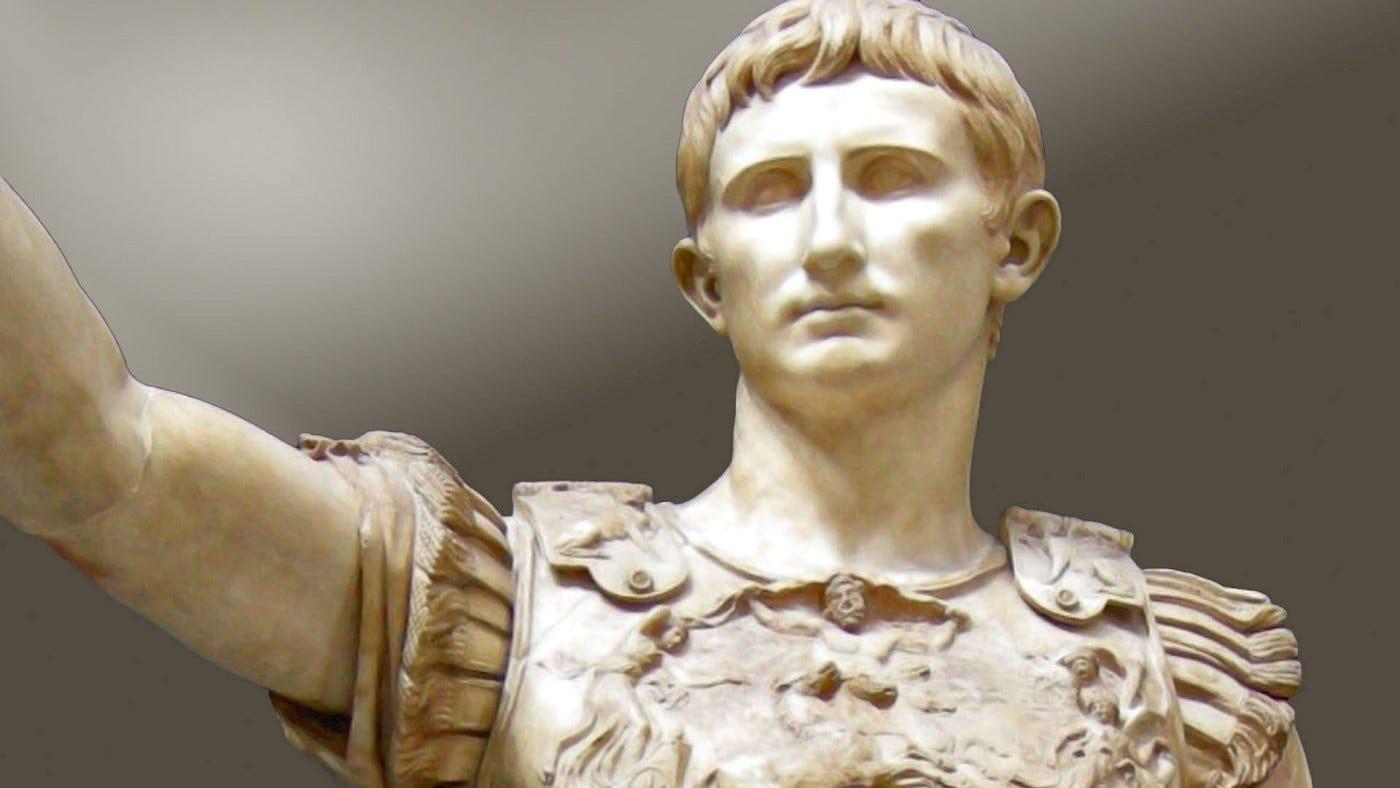
It’s astonishing how often we find ourselves drawn back to the Roman Empire, not for its grandeur, but for its sheer, unyielding effectiveness. There’s a seductive romance in observing how Roman leaders, even in the most brutal applications of their power, managed fundamental societal functions like criminal justice while simultaneously keeping the entire edifice of their vast society stable and productive.
This wasn’t just pragmatic governance; it was Applied Logic for a world perpetually on the brink. The Romans didn’t merely theorize; they operated. Their philosophy wasn’t an academic exercise; it was the bedrock for making decisions that preserved order, fostered growth, and ensured survival.
Here’s why their “lethal efficiency” and Stoic application offer an invaluable lens for navigating our own complex, “Mad Scientist” era:
1. The Stoic Architecture of Rule of Law
The Romans’ monumental shift from the “whims of men” to the Rule of Law was a philosophical triumph. For a Roman leader, maintaining society wasn’t about being “nice”; it was about Equanimity (Apatheia)- the unshakeable resolve to act rationally, regardless of internal or external pressures.
The Philosophy: Think Marcus Aurelius or Seneca, who argued that a leader must be like a “rock in the surf”- the waves crash against it, but it stands still.
The Application: Punishment was swift and public (deterrence), but increasingly bound by written law (The Twelve Tables). This isn’t just about harshness; it’s about establishing a predictable, unyielding “Physical Floor” for civilization. In modern leadership, this is the equivalent of a clear, non-negotiable “Contract and the Gate.” You don’t manage by emotion; you manage by the unimpeachable structure of the agreement. Highly relevant to Energy Markets of today.
2. “Lethal Efficiency” vs. Social Stability
Roman philosophy, particularly Middle Stoicism, taught that the individual is a part of a larger “Cosmopolis” (a global community). To protect the Body, sometimes you have to excise the Infection.
Managing Criminals: They employed a stark gradation of penalties—Honestiores (the elites) faced exile, while Humiliores (the masses) might face the mines or the beasts. Cruel by today’s standards? Absolutely. But it was Predictable.
The Modern Parallel: This is the “Zoloft Economy” in reverse. The Romans understood that if the “medication” (order) failed, the “negative gamma” (chaos) would take over swiftly and brutally. They consistently opted for a harsh, predictable floor over a soft, unpredictable collapse. It wasn’t about being liked; it was about preventing total systemic failure.
3. The “Priests of Justice” (The Jurists)
The great Roman jurist Ulpian famously called lawyers and judges the “Priests of Justice.” They didn’t just see the law as a set of rules; they saw it as a “Proper Philosophy.”
The Learning: They believed they were aligning the state with Natural Law (Ius Naturale)- the idea that there is a rational, inherent order to the universe that human laws and institutions must strive to mirror.
The Application to You: When you design a modern energy project, you’re not merely “building infrastructure.” You are, in essence, creating a “Natural Law” ecosystem- a rational, efficient island of order within a grid that has become fundamentally irrational. You are being a “Roman Architect” of energy, restoring equilibrium.
The “Roman” Take on Our Current World
If Seneca were looking at today’s OBBBA and the S&P 7,000 wall, he might offer:
“He who fears death (or a market crash) will never do anything worthy of a man who is alive.”
The Romans wouldn’t be swayed by the “numbness” of the Zoloft economy. They would cut through the noise and ask: Is The Load being secured? Is the infrastructure solid? Are the supply lines unbreakable? Is the “sweet spot” defended with relentless, Stoic focus?
This is the philosophy of applied action. This is energy leadership.
And these are the Leadership lessons we can apply to Modern Times.
— Archon Æstralis
P.S. We need more efficient leaders in society. If you liked this post and read to the end, please share.
Disclaimer: Not financial advice. I am a clean energy executive and Marine veteran sharing my personal market architecture. Manage your own risk. This content reflects a philosophical lens for strategic thinking and leadership, not literal historical or financial guidance.
I pronounce you, Clinton, our new energy roman leader!
I didn't even realize that wall of 7k. I barely look at SPX these days since I'm so focused on the nasdaq.
Now what can we learn from decline and fall of the roman empire?